
Prescriptions that climb year after year are one of the most common things parents bring up at a children’s eye exam. Your child sees clearly in September, and by spring the numbers have moved again. Nearsightedness in kids tends to work that way, because their eyes are still growing.
Myopia control glasses can help slow how quickly your child’s prescription increases, and they tend to work best when kids start early and wear them consistently. They sit alongside a handful of other myopia management options, and to everyone else, they look like ordinary glasses.
What’s Actually Happening Inside a Nearsighted Eye
Myopia develops when the eyeball grows longer than it should. Light lands just in front of the retina instead of directly on it, making nearby objects appear clear while distant objects look blurry.
Children’s eyes continue to grow throughout their teenage years, which means the eye can continue to elongate and myopia can worsen. Genetics play an important role, but daily habits matter too—spending less time outdoors and more time focused on close-up activities, such as screens, has been linked to faster progression.
Researchers project that myopia will affect roughly half the world’s population by 2050, which is part of why optometrists now take a more active approach to it.
Signs Your Child’s Vision May Be Changing
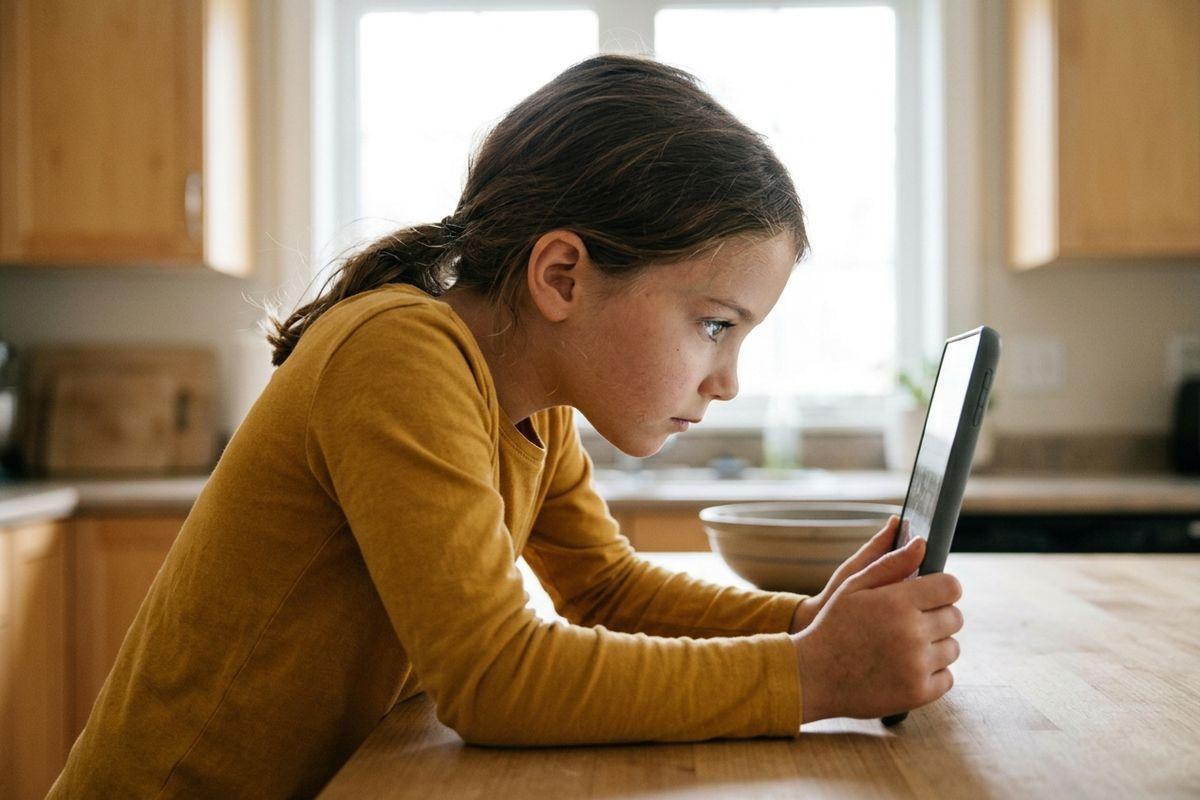
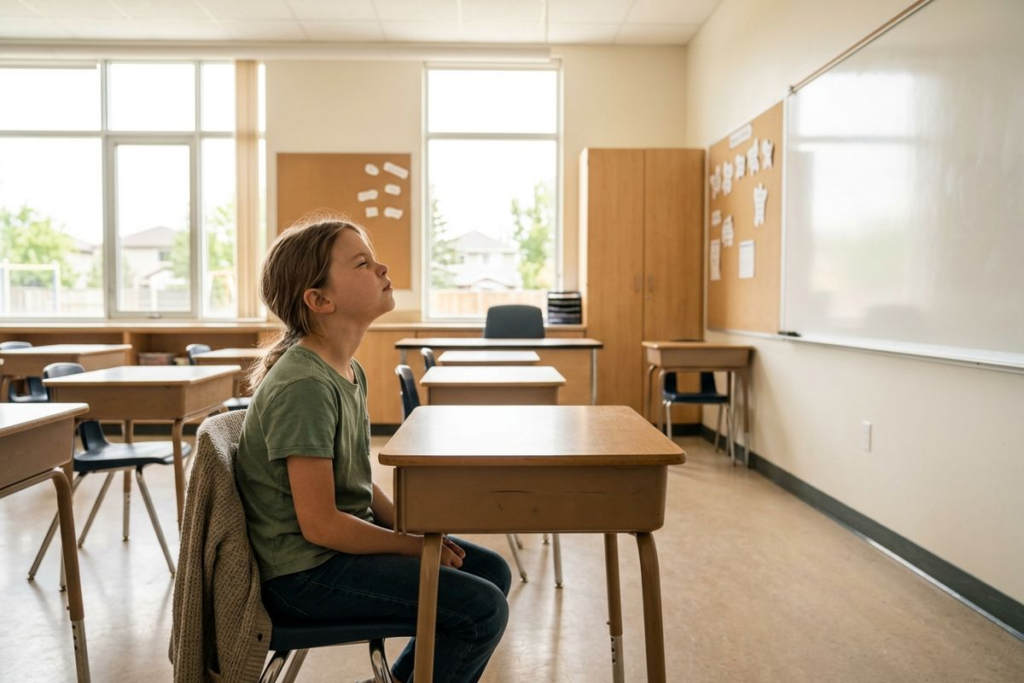
Kids rarely announce that their vision has changed. They adapt instead, squinting and leaning in without thinking about it. Keep an eye out for a few common vision changes in children:
- Squinting at the board at school or at anything across the yard
- Holding a tablet, phone, or book much closer than they used to
- Headaches that show up after school or homework
- Rubbing their eyes during reading or screen time
- Losing their place on the page, or skipping lines while reading
Book an exam if any of these sound familiar. A prescription change on its own isn’t cause for alarm, though it tells your optometrist something useful about how quickly things are progressing.
Standard Glasses vs. Myopia Control Glasses
Standard glasses correct blurry distance vision, and they do that job well. The eye keeps growing underneath them, so each new pair simply matches wherever the prescription has landed.
Myopia control lenses handle distance vision through the centre of the lens while the outer zones do something extra. Those zones create peripheral defocus, which softens the blur that forms at the edges of your child’s visual field. That edge blur is one of the cues the eye uses to keep elongating. Reduce the cue, and the growth signal weakens.
A few things shape how well the lenses perform:
- Full-time wear, weekends and holidays included
- A proper fit, since the optical zones need to line up with where your child actually looks
- Follow-up visits so your optometrist can track prescription and eye growth together
- An early start, while there’s more progression left to influence
Why Starting Myopia Management Early Matters
The goal isn’t just to keep your child’s prescription lower—it’s also to protect their long-term eye health. Higher myopia in adulthood carries an increased risk of retinal detachment and other retinal conditions, and that risk grows as the prescription grows.
Slowing progression through childhood can leave your child with less myopia as an adult. Thinner, lighter lenses tend to come along with that, too.
Lifestyle Habits That Support Myopia Management
Lenses do the heavy lifting, and what happens between appointments still counts.
Aim for 2 hours of outdoor time a day. Natural light and long viewing distances both appear to play a role. Recess, the walk home, and a bike ride all add up.
Build the 20-20-20 rule into homework and screen time. Every 20 minutes, have your child look at something 20 feet away for 20 seconds. Set a timer on the microwave if that’s what it takes.
Neither habit replaces a myopia management plan, but together they can help support better long-term outcomes.
Give Your Child’s Eyes a Head Start This Year
Myopia moves at its own pace in every child. Regular exams let your optometrist track prescription and eye growth over time, then adjust the plan as your child grows.
If the numbers have been climbing, or you’ve noticed the squinting, start with an exam. The team at Vivid Eye Care can walk you through myopia control lenses and the other options that might suit your child. Book an appointment and let’s take a look.