

Key Takeaways
- Progressive lenses shift smoothly between distance, intermediate, and near vision without any visible lines.
- They replace the need to switch between separate reading and distance glasses.
- A short adjustment period is common as your eyes and head movements adapt.
- Frame shape and lens type affect how comfortable each vision zone feels.
- A local eye doctor near Cranston Market or Meadows Mile can fit your progressives to match your daily routine.
You’re reading a menu, then looking up to check a street sign, then glancing at your phone. Your eyes are asked to shift focus dozens of times an hour, and if you’re over 40, that shift may not happen as easily as it used to.
At Vivid Eye Care, progressive lenses are a single pair of glasses that blend distance, intermediate, and near vision into one smooth lens, with no visible lines separating the zones. They’re designed to support the kind of daily focus changes your eyes make without asking you to swap glasses throughout the day.
How Progressive Lenses Work
A progressive lens changes power gradually from the top of the lens to the bottom. There’s no sudden jump in prescription strength, just a steady shift as your eyes move down the lens. This is different from older lens designs that use a visible line to separate powers.
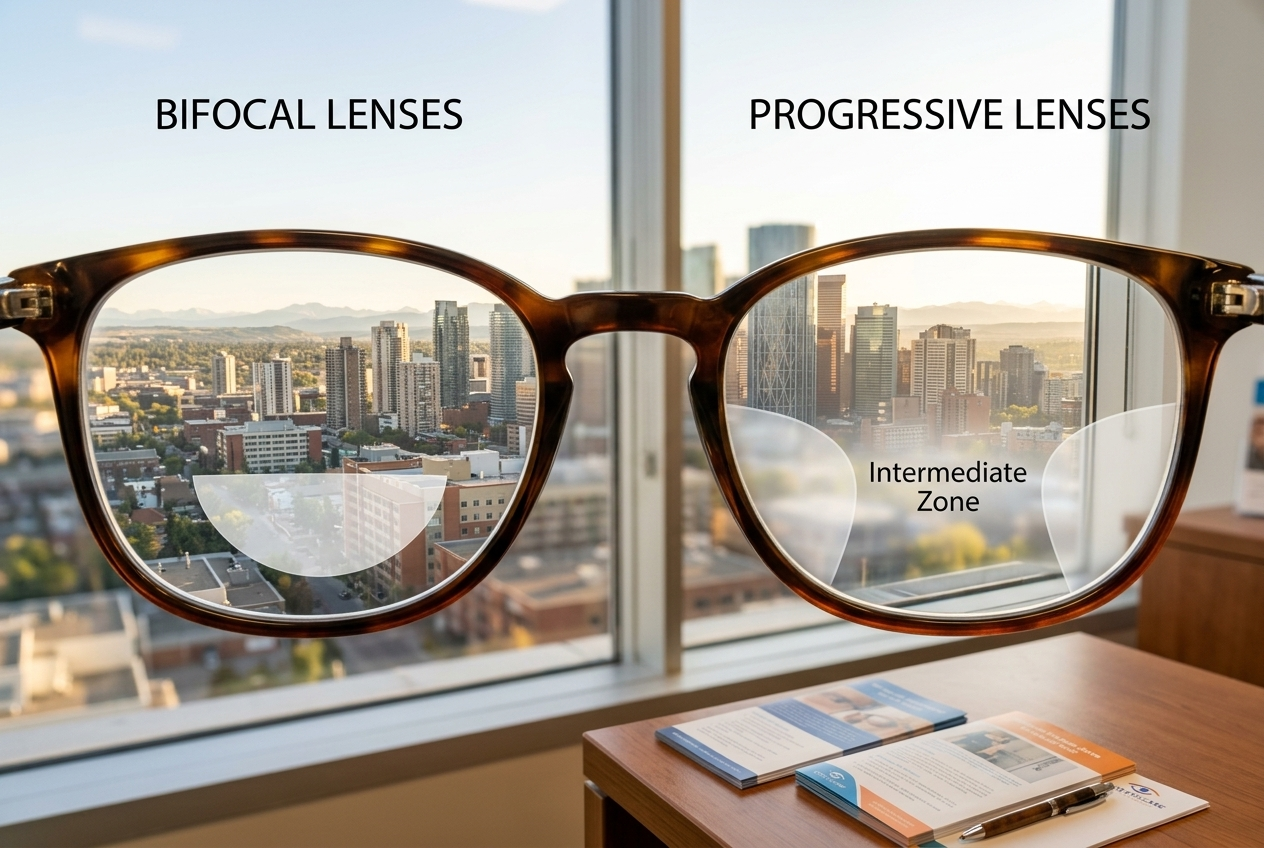
Because the change is gradual, progressive lenses don’t have the line that bifocals show. The lens surface blends the zones together, so your eyes glide from one focus range to the next.
Distance, Intermediate, and Near Zones
Each progressive lens has 3 general areas. The top zone supports distance tasks like driving or watching a movie. The middle zone is built for intermediate distances, such as looking at a computer screen. The bottom zone handles close work, including reading a book or checking a label.
Progressives vs. Other Lens Types
Progressive vs. Bifocal and Trifocal
Bifocals and trifocals use visible lines to divide vision zones. When your eyes cross that line, the image can seem to jump slightly, which some people notice right away. Progressive lenses skip that line entirely, so the focus shift feels more natural and gradual.
Progressive vs. Single-Vision Lenses
Single-vision lenses correct one distance only, whether that’s near, intermediate, or far. If your vision needs to cover more than one range, you’d normally need separate glasses for each task. Progressive lenses combine those needs into one pair, so you’re not swapping glasses between reading and driving.
Who Should Wear Progressive Lenses
Progressive lenses tend to suit adults who notice their near focus isn’t as sharp as it once was. They can also help people who currently switch between reading glasses and distance glasses throughout the day. If you’d rather carry one pair instead of two, progressives are built for that.
Progressive lenses may be a good option for you if you notice that:
- Screens feel blurry or your eyes tire quickly after computer work.
- Menus or phone text look smaller than they used to.
What to Expect with Progressive Lenses
Adjustment Period Tips
Point your nose toward whatever you’re looking at, rather than shifting your eyes alone. Wearing your glasses daily and consistently helps your eyes and brain adjust to the new lens design. Moving your head slightly, instead of relying only on eye movement, can make the switch between zones feel smoother.
Along with the visual adjustment, it is also good to be mindful that:
- Stairs may feel disorienting for the first few days as your eyes learn where each zone sits.
- Mild blur near the outer edges of the lens is common at first.
- A subtle swim effect can happen early on, and it tends to fade as you adjust.
Lenses and Frames That Fit Your Life
Progressive lenses come in many different designs, each shaped differently to widen or narrow the vision zones. Frame height also plays a role, since a taller frame gives each zone more room to work with. Coatings such as anti-reflective and photochromic options can be added depending on how you use your glasses day to day.
We Can Help
If you’re noticing changes in your near vision or you’re tired of switching glasses, a checkup with an eye doctor in Cranston Market is a practical next step. The fitting process for progressive lenses is personalized, matching your frame choice and prescription to the way you use your eyes throughout the day.
Vivid Eye Care can help you sort out whether progressive lenses fit your daily routine, from your morning commute near Meadows Mile to your evening screen time. Book an appointment to talk through your options and find a pair that works the way you do.