
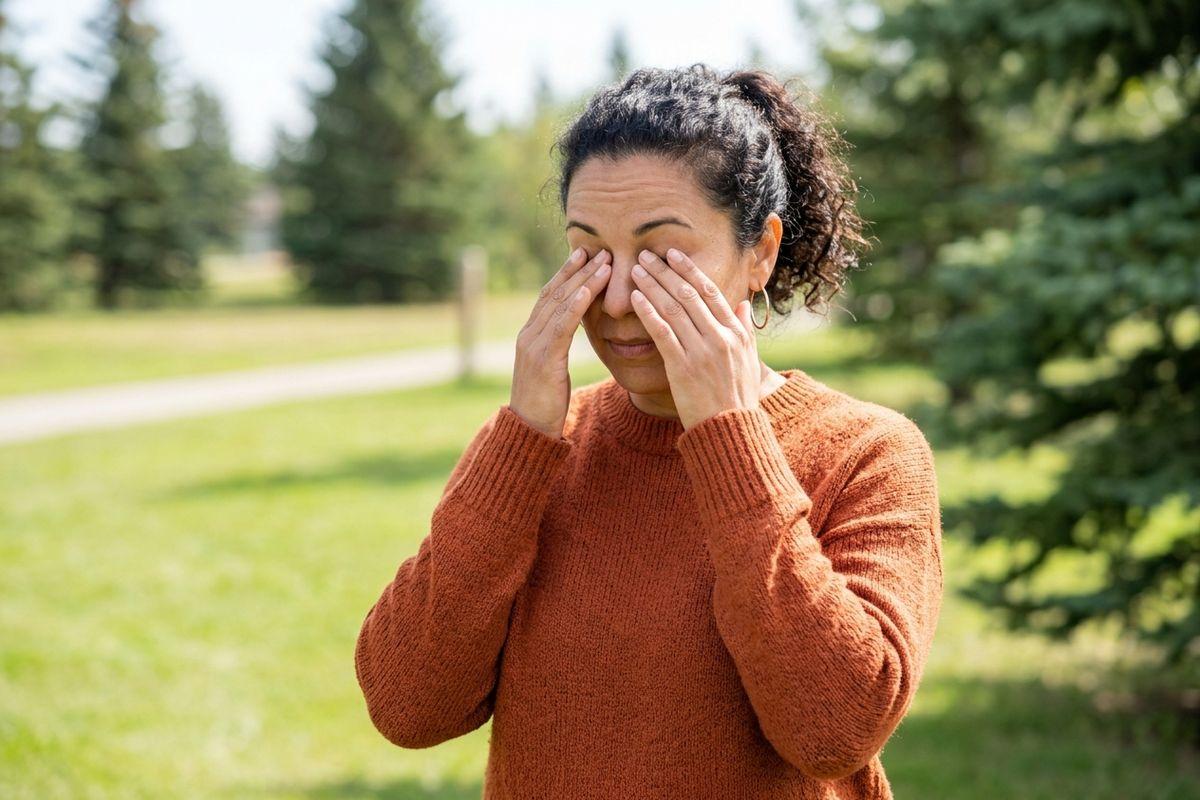
That sharp little sting every time you blink is hard to ignore. Whether it feels like a tender bump, a heavy ache, or a raw, gritty sensation, your eyelid is telling you something needs attention.
Most of the time, eyelid pain comes down to inflammation, a blocked gland, an infection, or irritation from allergens, dry eye, or daily habits. The good news? Most cases are easy to manage once you know what’s behind them.
Common Causes of Eyelid Pain When You Blink
A few common culprits tend to be behind that stinging sensation.
Styes and Chalazia
A stye forms when bacteria infect an eyelash follicle. You’ll notice a small, tender, red bump along the edge of your lid, and blinking pushes right against it.
A chalazion is different. It forms deeper in the lid when an oil gland gets blocked, creating a firmer, rounder lump that doesn’t always hurt at first but can become sore as it grows.
Blepharitis and Dry Eye
Blepharitis is inflammation along the eyelid edges. Your lids may look crusty when you wake up, feel itchy or greasy, and that gritty feeling can make every blink uncomfortable.
Dry eye adds to this by leaving the lid tissue strained and heavy, especially after long stretches of reading or screen use.
Conjunctivitis (Pink Eye and Allergies)
Conjunctivitis, more commonly known as pink eye, is inflammation of the tissue covering the white of your eye and the inside of your eyelid. It comes in a few different forms, and not all of them work the same way.
Allergic conjunctivitis happens when pollen, pet dander, or dust triggers a reaction. The tissue gets puffy and sensitive, so blinking feels irritating rather than natural.
Viral and bacterial conjunctivitis are the contagious forms most people mean when they say “pink eye.” Both bring redness, swelling, and discharge that put extra pressure on the lids with each blink.
Why Does Only One Eyelid Hurt?
One-sided eyelid pain usually has a very specific, local cause. It’s rarely a sign of something serious on its own, but it does point to something happening in that one spot.
Common reasons one eyelid hurts while the other feels fine include:
- A stye or chalazion forming on that specific eyelid
- Trapped debris, dust, or an ingrown lash on one side
- Makeup or a contact lens irritating one eye more than the other
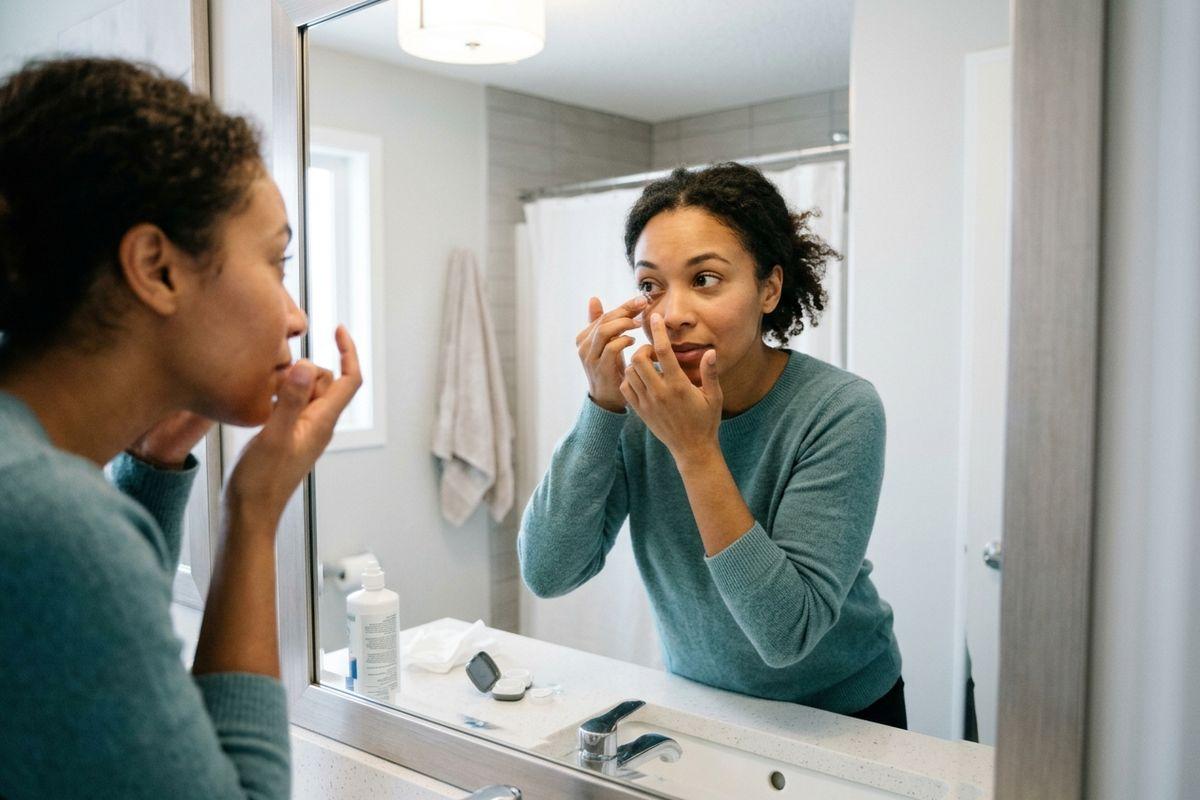
If you wear contacts and notice one eye reacting more than the other, check your fit. An improper fit can create friction and irritation against the lid.
Lifestyle Habits That Can Affect Your Eyelids
A few everyday habits can make eyelid discomfort worse without you even realizing it.
Screen Time
Spending hours in front of a screen cuts down how often you blink, which dries out the eyelid tissue and leaves it more prone to irritation by the end of the day.
Try the 20-20-20 rule on screen-heavy days: look at something 20 feet away for 20 seconds every 20 minutes. It can give your eyelids a chance to recover before discomfort sets in.
Sleep
Poor sleep compounds eyelid discomfort. When your body doesn’t get enough rest, your eyes tend to feel raw and heavy, making even minor lid issues more noticeable.
Eye Rubbing
Rubbing your eyes with your fingers transfers bacteria directly to the delicate skin around your lids. It also puts pressure on any bumps already forming.
Makeup
Old mascara and eyeliner are another factor. Products kept past their shelf life can carry bacteria and clog the small oil glands along your lash line, setting the stage for styes and blepharitis.
Simple At-Home Care for a Sore Eyelid
Before booking an appointment, try a few gentle steps for mild eyelid discomfort. These can help ease irritation and support natural healing:
- Hold a warm compress over the closed lid for 5 to 10 minutes to help loosen any blocked glands
- Gently clean along the lash line with a cotton pad dampened in diluted baby shampoo
- Take a break from contact lenses and eye makeup until the soreness settles
Warm compresses work by softening the oils in blocked eyelid glands, which can make them easier to drain naturally. Using one consistently for a few days is often the most helpful first step for both styes and blepharitis-related discomfort.
When to See an Optometrist
At-home care can help with mild cases, but some symptoms call for a closer look. Reach out to an optometrist if you notice:
- Pain or swelling that gets worse rather than better after a few days
- Changes in your vision or redness spreading beyond the eyelid
- A bump that grows quickly or discharge coming from the eye
Give Your Eyelids the Attention They Deserve
Eyelid pain doesn’t have to be a mystery, and it doesn’t have to stick around, either. Knowing the cause is the first step toward feeling better.
The team at Vivid Eye Care is here to help you get answers and find relief. Whether you’re near the Cranston Market location or the Meadows Mile location, booking an appointment is a simple next step when home care isn’t doing enough. Your eyes and your comfort are worth looking after.